
Salisbury Directory Holdings
The surviving Salisbury directory holdings are best treated as verified starting points. They do not form one unbroken annual run. The earliest clear item is a 1907 Salisbury directory. It was transcribed and printed in 1998, and it is listed in a Maryland Historical Trust bibliography. Nabb also keeps a Delmarva Business Directory collection covering 1931 through 1967. Its finding aid describes business, farm, professional, and regional directories for Salisbury, Wicomico County, and the wider Delmarva area. That describes a collection, not a promise. No single year or household is guaranteed to appear.
| Collection | Years or scope | Where held | Access path |
|---|---|---|---|
| Salisbury City Directory transcription | 1907 documented | WPL/Nabb lead, named in the MHT bibliography | Ask staff to verify the shelf and page |
| Delmarva Business Directory collection | 1931–1967 | Nabb Research Center | Finding aid and reading-room request |
| Digitized Salisbury directory leads | 1948, 1953, 1957, 1959 reported | Confirm with WPL, Nabb, or a licensed database | Lead only, not a verified local run |
| Rotary Club of Salisbury rosters | 1920–2007 | Nabb collection | Historical organization records |
Treat the reported mid-century dates as leads. A local shelf check must confirm the volume itself. No source establishes a current reverse or criss-cross run for Salisbury either. Ask the reading-room staff whether an address-ordered volume exists for your year. The Delmarva Business Directory finding aid is worth reading before you request a folder.
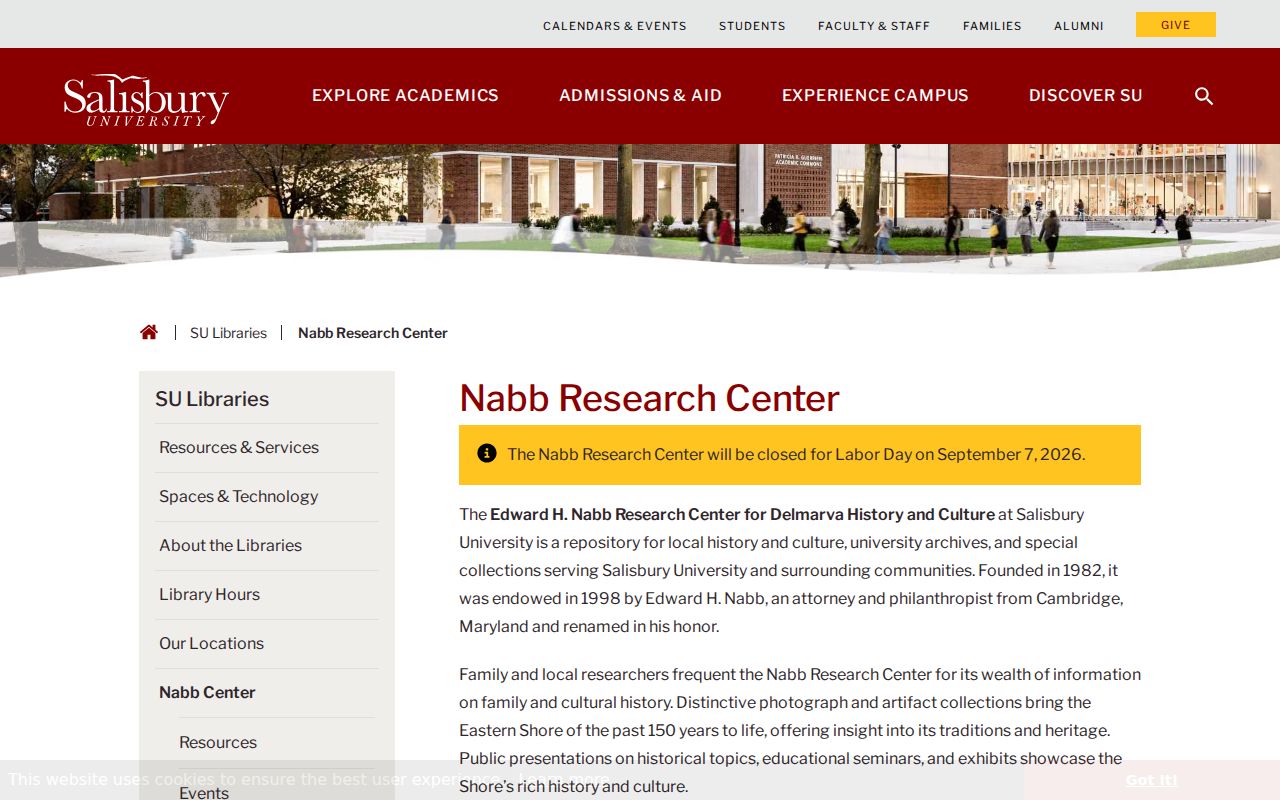
The finding aid sorts holdings by directory type and period. Use it to place a volume before requesting it in the reading room.
WPL’s Salisbury Directory Shelf
The Vicki Greene Maryland History Room and Genealogy Collection at Wicomico Public Libraries is a natural first stop. It serves anyone hunting old directories. The room also holds local family material and historic-house files. It keeps land records, church histories, Daily Times indexes, maps, and regional Delmarva resources. Nothing circulates. A directory or microfilm item gets used on site rather than checked out. The downtown Paul S. Sarbanes Library posts room hours separately from branch hours. A quick call to the reference desk pays off before a focused visit.
WPL publishes no complete year-by-year Salisbury directory inventory online. Bring the address, surname spellings, approximate years, and any old street suffix. Staff can check the local shelf. They can tell you whether a listed volume is a business directory or a household resource. They can also point you to databases whose access conditions may differ. The Wicomico Public Libraries collection policy describes the Maryland History Room's local-history scope.
Because the collection does not circulate, rare local material stays in the room. That lets you compare directories against newspapers, maps, and family files in a single visit.
Nabb’s Salisbury Directory Archive
The Nabb Research Center at Salisbury University became the official archival repository for the City of Salisbury in 2022. Its city material reaches back to 1867. Its holdings include more than 12,000 books and published items, local-history and genealogy volumes, maps, newspapers, government and church microfilm, land surveys, family papers, and organizational records. Those layers matter when an entry needs support. They also matter when a directory gap prevents a clean sequence of Salisbury residents.
Everything is non-circulating and available on site upon request. A good request names the person, an address or organization, likely dates, and the kind of item sought. The center's finding aids identify collection-level material. The reading-room staff can bring the actual folders, microfilm, and reference works.
The Nabb Center resource page outlines its collections and on-site access.
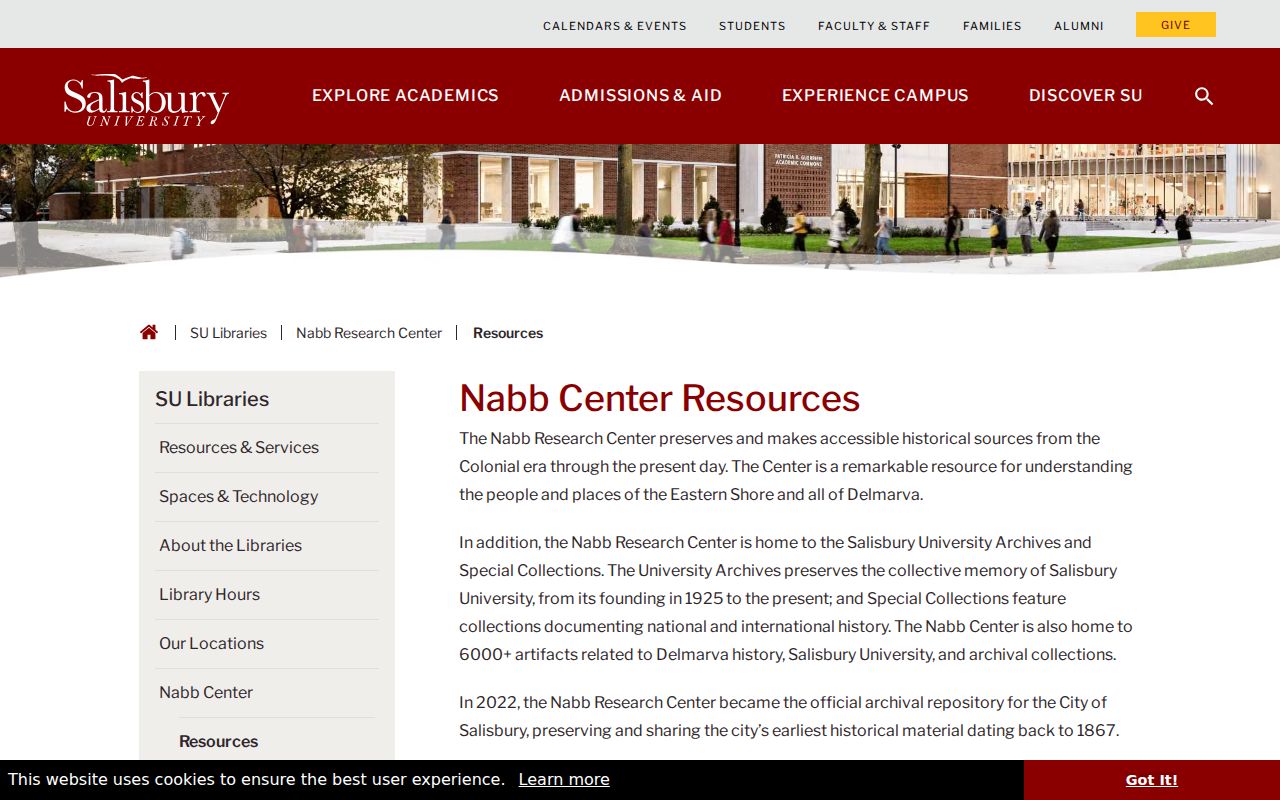
With city archives, maps, microfilm, and finding aids under one roof, Nabb can turn a single directory lead into a broader Salisbury household search. That concentration is rare for a city this size.
Note: The 2022 repository agreement explains why early city material now sits at a university research center rather than in a routine municipal web search.
Reading a Salisbury City Directory
No reproduced directory page accompanies these Salisbury volumes. So no local abbreviation, owner mark, or household format should be guessed in advance. When staff retrieves a volume, copy exactly what the publisher prints before drawing any conclusion. A directory is a dated editorial snapshot. It is not proof of title, household membership, or every person who occupied an address.
| Printed name | Record initials, suffixes, spelling, and whether a separate business listing appears. |
|---|---|
| Address | Copy the number, street spelling, and any residence or business notation exactly as printed. |
| Occupation or organization | Note it only if the inspected entry includes it; fields vary by volume. |
| Household notation | Preserve any spouse, widow, parenthetical, or other notation without assuming a standard format. |
| Abbreviation key | Photograph or transcribe the volume’s own key before expanding initials or symbols. |
- Criss-cross directory
- An address-ordered directory that can place names along a street, if staff confirms that Salisbury volume exists.
- Householder index
- An index organized around a household contact rather than every possible resident.
- Abbreviation key
- The publisher’s legend for the shorthand used in that particular volume.
Salisbury Directories Beside 1950 Census
Climb a date ladder instead of treating a directory as a stand-alone answer. A printed entry can supply a name spelling, street, or occupation. It may also list an organization or address for one publication period. The nearest public federal census then adds household composition and age. It also adds birthplace, relationship, race, and neighborhood geography. Federal census records follow a 72-year release rule. That makes 1950 the newest generally public census.
- Start with a confirmed name or address and note the exact directory year.
- Copy every spelling, initial, street suffix, organization, and neighborhood clue from the inspected entry.
- Check the next available volume for the same surname, nearby address, and likely organization.
- Pair the closest census year with the address trail, allowing for a move between the two snapshots.
- Use an obituary, estate notice, church record, or newspaper item to test a disappearance from the printed record.
A missing entry can mean a move, a changed spelling, a narrower publication scope, or a volume that simply skipped the person. When the question turns to a current address or parcel, the Salisbury street directory has the address-keyed records path.
Salisbury Black History Searches
Enduring Connections gathers Delmarva Black history into one searchable transcription archive. Censuses sit alongside church records, newspapers, ledgers, certificates of freedom, and oral histories. A mainstream city directory often missed Black households. The advanced search accepts required, excluded, and optional words. Year ranges, state, county, and location filters narrow things further. You can test a surname against a church, a neighborhood, a business, or an event without assuming the directory caught everyone.
Use the city and county filters together. Keep the source date beside any name match. A transcription is a doorway, not a destination. Read any match with its source type and period in mind, then chase the original record when the detail matters.
Open the Enduring Connections advanced search to use its keyword, date, and location filters.
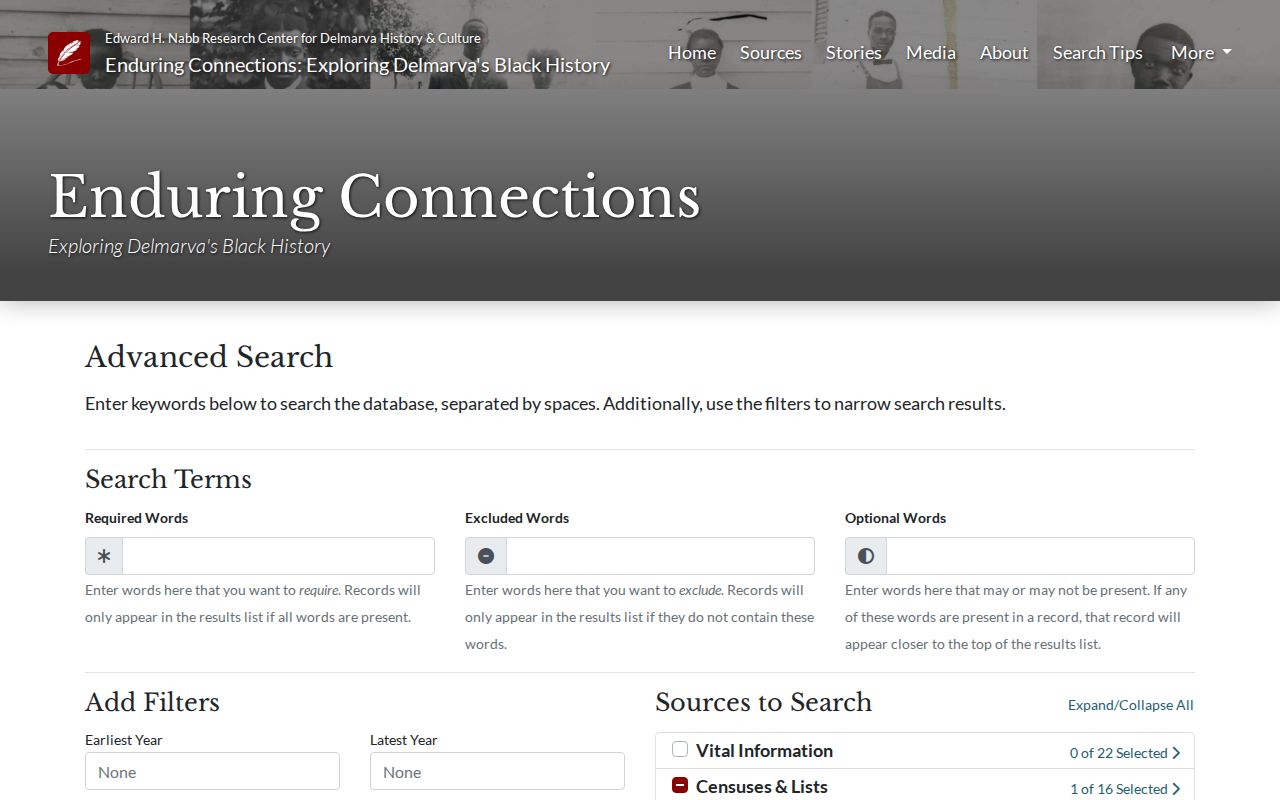
Old directories rarely recorded such bonds. This search layer can rebuild a family or social connection that a Salisbury business or household directory never captured.
Salisbury Maps for Old Addresses
Nabb's map finding aid traces a long local sequence. It starts with an 1870 Southwest Salisbury plot and an 1877 city map. Business layouts follow from 1885, 1888, and 1894. Later holdings include a 1907 city map, a 1909 bird's-eye view, a 1931 land-plots map, and a Salisbury-and-vicinity map from the 1950s. The Maryland Historical Trust bibliography adds 1904 and 1911 Sanborn maps held on Nabb microfilm. Together these sheets can show whether a street existed and how a lot was configured. They also show a building's footprint and use.
No confirmed Salisbury street-renumbering year exists. Preserve each printed address exactly as written. Compare it against maps and later parcel records, and ask archive staff about street-name changes instead of forcing a modern number onto an early listing.
Keep three dates separate. One date is printed in the directory, another on the map, and a third on any later land record. A city map may reveal a street connection. A Sanborn sheet shows a structure's footprint and use. A later parcel reference can test whether the lot stayed intact. It is slower than matching a familiar name. It also prevents a renamed road, a divided lot, or an expanded city boundary from being mistaken for a simple household move.
Salisbury Directory Boundaries
A city directory works best as one dated source among several. It can omit people. Publishers organized information differently, and their geographic or business scope rarely matches a modern municipal boundary. Salisbury's archival geography compounds the problem. Wicomico County was created in 1867 from parts of older Somerset and Worcester land. Earlier family or land clues can therefore sit outside a simple Salisbury label.
Use an official custodian for modern confirmation. Compare dates and address types there. For a historic person, keep the original page image or citation, the publisher, the volume year, and the repository alongside your notes. That custody record makes later corrections far easier.
Personal use. Historical household research can support family, community, and place history. Do not use old and current records to stalk, harass, or harm anyone.